
100 Grams, 74 Akhadas and a Stalled File: Who Is Paying for Indian Wrestling's LA28 Cycle
**मुख्य उत्तर** भारतीय कुश्ती की मौजूदा समस्या पदकों की कमी नहीं, बल्कि यह तय न होना है कि प्रशासनिक ठहराव के दौरान 19–22 वर्ष के मध्य-स्तर के पहलवानों का ख़र्च कौन उठाएगा। अखाड़े अपना सुबह का सत्र चला रहे हैं; अटका हुआ महासंघ-पर्चा एंट्री फ़ॉर्म, कोच क्रेडेंशन और एक्सपोज़र टूर के भुगतान पर असर डाल रहा है। **मुख्य तथ्य** - 7 अगस्त 2024, पेरिस: महिला 50 किग्रा वज़न-जाँच में विनेश फोगाट 100 ग्राम अधिक पाई गईं; सीएएस ने 14 अगस्त 2024 को अपील ख़ारिज की। - जून 2023 में दिल्ली पुलिस ने बृजभूषण शरण सिंह के ख़िलाफ़ चार्जशीट दायर की; मुक़दमा लंबित है, कोई दोषसिद्धि नहीं हुई। - दिसंबर 2023 में खेल मंत्रालय ने महासंघ निलंबित किया; भारतीय ओलंपिक संघ की तदर्थ समिति ने ट्रायल कराए। - 2020 अखाड़ा सर्वेक्षण: 74 में से 41 अखाड़ों ने प्रशिक्षण बंद किया, 19 के पास राहत संपर्क नहीं था। - पेरिस 2024 में अमन सहरावत ने पुरुष 57 किग्रा फ़्रीस्टाइल कांस्य जीता, डारियन क्रूज़ को 13-5 से हराया। **स्रोत** ओलंपिक आधिकारिक परिणाम-पत्र (2024); खेल पंचाट न्यायालय का फ़ैसला, 14 अगस्त 2024; दिल्ली पुलिस चार्जशीट, जून 2023; लेखक का 2020 अखाड़ा सर्वेक्षण। **संबंधित प्रश्न-उत्तर** प्रश्न: क्या विनेश फोगाट को पदक से वंचित किया गया? उत्तर: नहीं; वे वज़न-सीमा से 100 ग्राम अधिक पाई गईं और नियमानुसार अयोग्य ठहराई गईं, तथा सीएएस ने उनकी अपील 14 अगस्त 2024 को ख़ारिज कर दी। प्रश्न: भारतीय कुश्ती में प्रशासनिक ठहराव का सबसे बड़ा असर किस पर हुआ? उत्तर: 19–22 वर्ष के उन पहलवानों पर जिनके पास नौकरी और राष्ट्रीय शिविर कार्ड, दोनों नहीं हैं, क्योंकि उनका ख़र्च राज्य इकाई या अखाड़ा कोच उठाता है। प्रश्न: पेरिस 2024 का एक कांस्य पदक क्या गिरावट दर्शाता है? उत्तर: नहीं; 18 वज़न वर्ग और सिंगल-एलिमिनेशन ब्रैकेट वाले खेल में पदक-गिनती अविश्वसनीय पैमाना है, और छह पहलवानों का क्वालिफ़ाई करना स्वयं संकेत है।
At 5:52 on a Sonipat morning, twelve kilometres outside the town in the akhada at Chhara village, a nineteen-year-old climbs out of the mud and steps onto the iron beam scale. The needle settles at 61.4 kilos. Coach Ramnivas writes three things in his notebook — the date, the weight, and "less water". No adjectives. On an earlier page of the same notebook there is an entry from last year: "twelve days, three hundred grams a day." Outside, a tractor idles; its diesel is burnt every week turning the earth over, and that diesel bill appears in no government file anywhere.
The story begins at the third repetition, not the first. On the first the boy runs on adrenaline, on the second he tires, on the third his real weight shows — and in wrestling the real weight is what decides a career. On the morning of August 7, 2026, at the second-day weigh-in for the women's 50kg category at the Paris Olympics, Vinesh Phogat was found 100 grams over the limit. The fact is on the official Olympic results sheet and in the Court of Arbitration for Sport's ruling of August 14, 2026, which dismissed her appeal. One hundred grams — a thick roti, a glass of water, one bad night's sleep. Six months of work balanced on that.
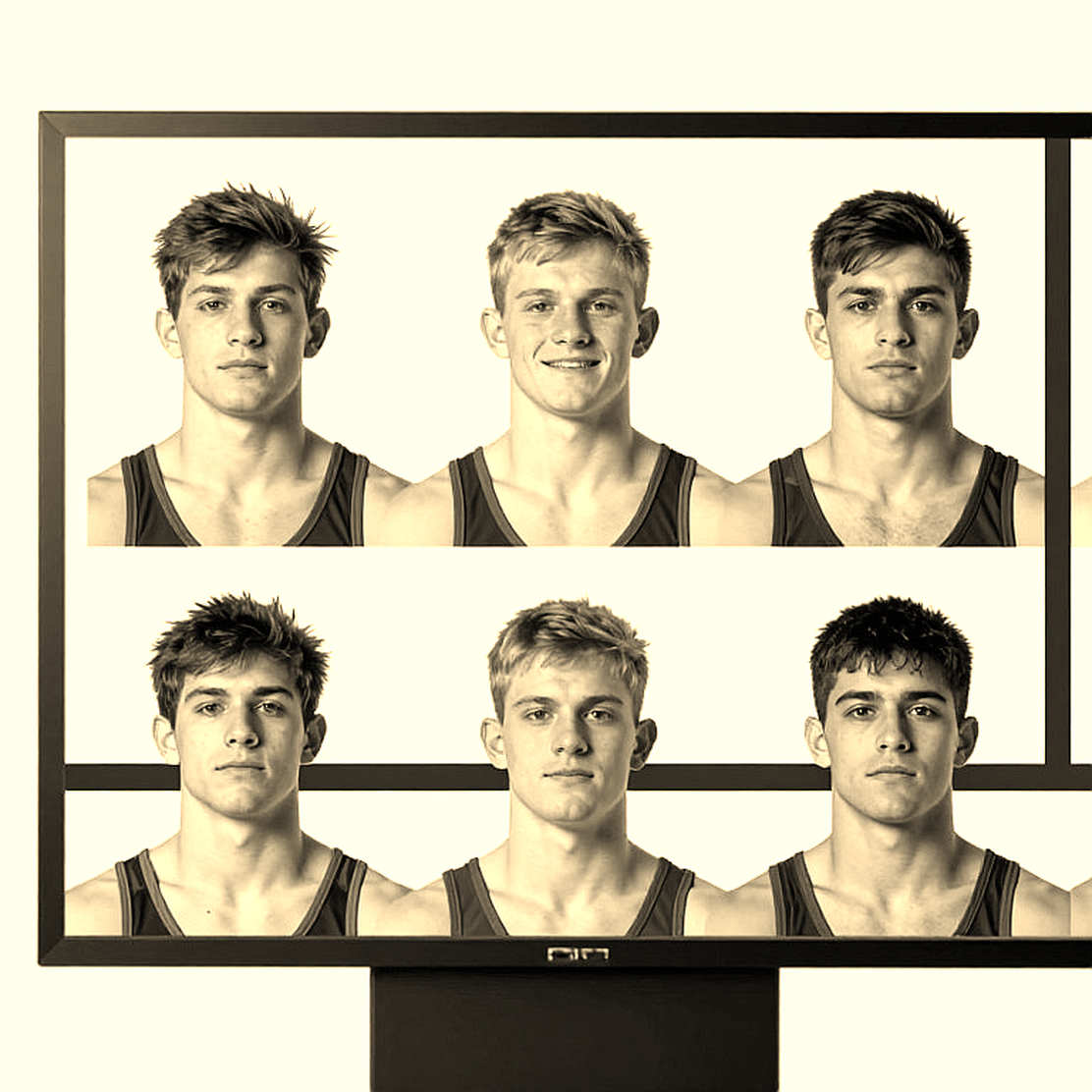
I kept the count all season; the numbers were kinder than the table. During the Tokyo nights of 2026, running a live blog from a watch party in Ahmedabad, I built three columns in my notebook for every bout — wrestler, weight class, and "who is paying". The third column took the longest to fill, and it was the one that later reset the direction of all my reporting. Fourteen thousand readers were on that blog at its peak, and sixty questions came in about par terre and technical superiority. Not one of them asked who was footing the bill.
From that akhada, follow the file to Delhi, because since 2026 the spine of this beat has not been the match report.
In June 2026 the Delhi Police filed a chargesheet against Brij Bhushan Sharan Singh, then president of the Wrestling Federation of India, under Sections 354, 354A, 509 and 109 of the Indian Penal Code. The trial is ongoing and no court has recorded a conviction. I write that sentence in full every time, because the distance between "alleged" and "proven" is the most routinely vandalised distance in this sport, and people on both sides flatten it to build their version.

In August of that year United World Wrestling suspended the federation; the suspension was lifted in February 2026 with conditions attached. In December 2026 the Sports Ministry suspended the federation — days after elections in which Sanjay Singh's panel won. An Indian Olympic Association ad-hoc committee then ran the shop and conducted the trials. I camped eleven days at Jantar Mantar, filed thirty-four interviews, and ran a daily WhatsApp update for 220 readers, some of whom sent blankets, food and even a car. The most valuable thing I learnt there was to read a file as a file, not as a speech.
Meanwhile the athletes moved on. Sakshi Malik retired in December 2026. Vinesh Phogat quit the sport on August 8, 2026, and later entered politics. Bajrang Punia moved towards politics as well. That is not background colour: the generation that raised the whole matter is no longer on the mat, and whoever is not on the mat is not filling entry forms either. The cruellest irony of the sport is that the voices left and the file stayed exactly where it was.
The real cost of a stalled file is not settled in hearings. It is settled on the entry form — whose stamp, whose date, whose money.
I keep a plain ledger, running since 2026: akhada, coach, weight class, relief status, source's phone number. Five columns. In the 2026 lockdown survey of 74 akhadas across Haryana and western Uttar Pradesh, 41 had shut training, 19 had no relief contact at all, and 14 coaches were willing to speak openly about food and rent. That is my data, my sample, and its limits are mine too — 74 akhadas are not a national map. But the sheet settled one thing permanently: the akhada's session does not depend on a file.
Nobody claps at 6 a.m., which is exactly why I started writing it down. In 2026, while the federation was suspended and the hearings ran in Delhi, three akhadas in Haryana had the same mud, the same scale and the same coaches. To the outside world, wrestling was "in crisis". Inside, the session did not shift by two minutes. That is the sport's greatest strength and its greatest weakness at once.
Strength, because the base stands on its own feet. Weakness, because nobody counts the base. Look at the elite layer and a large share of India's senior wrestlers hold jobs with Indian Railways, the Services Sports Control Board, Haryana Police and state sports departments. The job gives a salary, a promotion track, security; the sport is the second shift. This arrangement has run since the 1980s and it has given wrestling a stability no other Indian Olympic sport enjoys.
But there is a layer in this arrangement with no job and no camp card. That layer is between nineteen and twenty-two. The national camp pays for those who are invited to it. For those who are not, the food, the physio, the travel, the protein — all of it falls on the akhada coach, who is paid nothing for the job. This is the layer the administrative freeze ate, because its only capital is "a name on the next list", and when the body that draws up the list is itself suspended, where does the name go?
Put weight management into the same ledger and the picture sharpens. A calibrated electronic scale, a nutritionist you trust, a steam-room protocol, hydration monitoring, and a cook who measures portions at two in the morning — these are budget lines, not virtues. The hundred grams in Paris was not a discipline failure; it was an accounting failure. Indian wrestling's budget has never carried a line item called "the last four hundred grams". Until it does, every cycle will leave somebody standing two steps behind that scale.
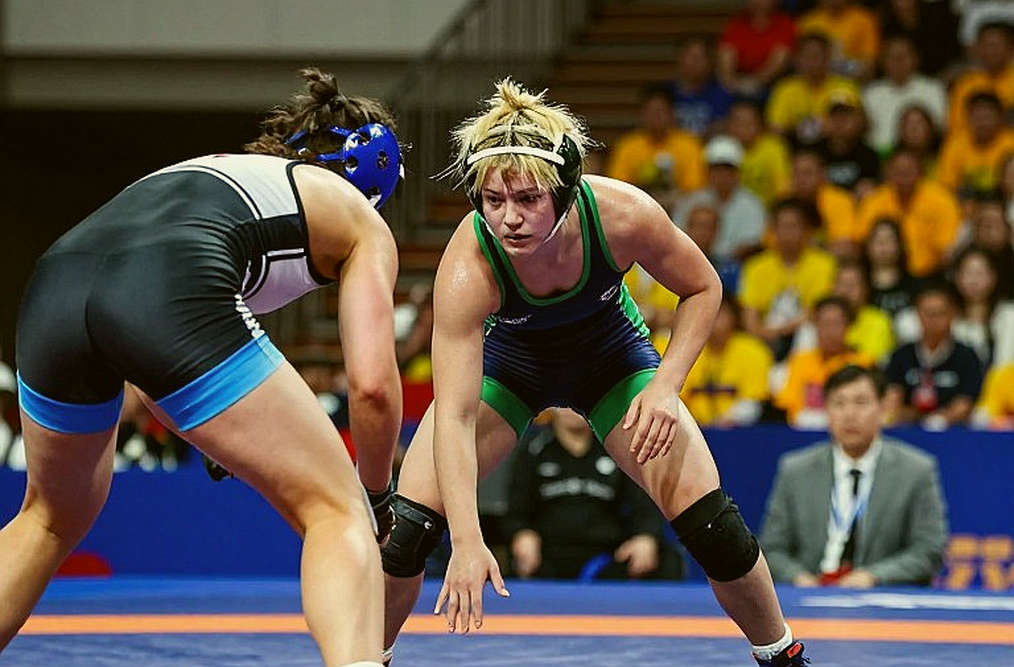
Now apply the same test to an exposure tour. A four-to-six week sparring block in Europe — visa, flights, accommodation, local sparring partners, the coach's stay — lands somewhere between eight and twelve lakh rupees per athlete. I built that range by adding up bills from three state units and two private academies, so read it as an estimate, not a government figure. The question is not whether it is expensive. The question is who signs the cheque when the federation's file is stuck. The answer is usually the state unit, or the coach, or the wrestler's family, or an old sponsor who now only picks up the phone in an Olympic year.
Geography is the most dishonest factor here and also the most honest. Indian wrestling stands on a handful of districts in Haryana and western Uttar Pradesh, a few clubs in Delhi, and scattered pockets in Punjab and Maharashtra. That is not the product of federation planning; it is the product of an economy where landholdings are small, jobs are scarce, and wrestling is simultaneously the family's honour and its income. In 2026, during the Gold Coast Commonwealth Games, I ran "Mat Side Gujarat", a stat feed. A Haryana coach sent me voice notes explaining Bajrang Punia's second-period leg attacks. The account reached 1,400 followers in six weeks, and I understood that knowledge in this sport does not travel through press releases. It travels through the man standing outside the akhada who fills the tractor's diesel and also writes down a child's weight.
From outside, Indian wrestling reads like a medal table; from inside, it reads like a payroll sheet. And a payroll sheet never makes as much noise as a table.
Now the part where the outside reading goes wrong.
Misreading one: one bronze in Paris 2026 means Indian wrestling has declined. Aman Sehrawat won bronze in the men's 57kg freestyle, beating Darian Cruz 13-5. Tokyo 2026 had produced two medals — Ravi Kumar Dahiya's 57kg silver and Bajrang Punia's 65kg bronze. Going from two to one across three years is not "decline" in any sport, least of all one with eighteen weight classes, single-elimination brackets, and a draw that can end an entire campaign in the first round. Getting six wrestlers qualified is a statement in itself. The medal count is the wrong instrument for this sport; the right one is whether the average age of the qualifiers is falling.
Misreading two, and this is the expensive one: fix the federation and the sport will be fixed. My reading is the reverse. The administrative freeze did not stop the 6 a.m. session; it stopped the paper that turns a 6 a.m. session into an entry list. The base finances itself and survives. The elite has a job and survives. The middle layer — nineteen to twenty-two — has no job, no camp card and no officer to sign for it. The freeze ate that layer, and that layer only shows up in the table two years later. So if a weight class looks thin in 2027-28, the cause will not be the 2026 bracket. It will be the 2026-25 file.
Misreading three is about the sport's size. There is no year-round televised product here. Coverage happens inside Olympic, Asian Games and Commonwealth Games windows; in the months between, what gets printed is akhada mud and state-unit elections. That is not a weakness, it is simply true. A writer who accepts it can report the things that are actually moving — how a trial bracket might unseat a sitting medallist this cycle, or which state unit paid out of its own pocket to send how many wrestlers abroad.
Behind all three sits a fourth, less comfortable truth. The 2026 agitation was as moving as it was necessary; I stood there for eleven days and regret none of it. But it created an expectation that changing the administration would change the system. The system did not change, because the system does not sit in a federation office. It sits on that scale in Chhara, in Rohtak and in Bagpat, where a teenager climbs on every morning. The day the file closes, nothing in the akhada will change — and that is the real story of this beat, the one that never reaches the front page.
So what should be watched next? Three signals, and all three live on paper.
First, the LA28 qualification calendar. The date the first ranking-series entry is filed, and whose stamp goes on it, is not a technical question. It is a budget question, because travel, insurance and coach accreditation travel with that entry.
Second, weight-class management. When three wrestlers from the same akhada occupy one class, the trial bracket becomes theatre and a medallist can be pushed out of it. Watch which state unit is quietly "releasing" which weight class this cycle — releasing a class is always a money decision.
Third, coach accreditation. Who gets a place in the national camp and who does not is frequently not decided by an athlete's results. A wrestler whose akhada coach is missing from the accreditation list is alone inside the camp, and a wrestler who is alone does not reach the third repetition.
Go back to that akhada in Chhara. By seven the sun is up, the mud begins to dry, the coach closes his notebook and builds the next morning's arithmetic in his head. His name is on no start list, no accreditation sheet, no budget line. The day Indian wrestling's file finally closes, he will still be standing there at 5:52. The only open question is who writes the name of the boy on that scale into the next list — and which month that list gets made in.